
The Law of Armed Conflict in Total Defence
11-12 November 2026 in Aarhus
This conference focuses on the law of armed conflict in total state self-defence, where one or more states are fighting collectively against an aggressor and for their integrity and sovereignty. The conference is divided into two parts, one on conflict preparation in peace, crisis and wartime and a second part on the application of the Law of Armed Conflict (LOAC) in large scale conflict.
Conference themes and topics
Conference themes and topics
Part I. Conflict preparation in peace, crisis and wartime
The first part of the conference addresses selected issues of total state defence in terms of defence preparation, distinction, precautions, protection of critical infrastructure and cultural protection in the peace time legal framework, including various forms of crises, emergencies, competition and hybrid activities, and in situations of armed conflict.
Most of the precautionary measures can, should and must be prepared and/or done in peace time or in times of crisis leading up to a possible armed conflict. Moreover, protective measures and precautions taken prior to the outbreak of hostilities are likely to be much more effective and to provide much better protection during the armed conflict. In addition, such precautionary measures and preparation of a possible future battlefield will allow the armed forces to operate without the same level of legal restraints and constraints and, thus, provide for more freedom of movement and freedom of actions in a state’s total defence.
In a still functioning state as opposed to a failed state without an in-place functional governmental structure and power, civil society will be regulated and controlled by national authorities during times of peace and crisis. This will continue as far as possible during wartime (times of an armed conflict). In case of a foreign (alien) occupation, the occupying power (state) has the obligation to ensure civil law and order as far as tenable with due respect to the law of the occupied state or territory. In times of armed conflict, there might be a situation of non-functioning or mal-functioning state authorities, where a law enforcement vacuum in the sense of a full or partial absent law enforcement mechanism can be the result, but the territorial law of that state will still be applicable. The obligations of the Law of Armed Conflict (LOAC or International Humanitarian Law, IHL) also apply in apparently peaceful places outside the area of actual armed hostilities, and, moreover, some LOAC obligations apply in peace time (that is before an armed conflict) as well. Hence, in a functional or partly functional war fighting state, a clear distinction between the applicable peacetime and wartime legal framework of LOAC/IHL is not always possible.
One topic addressed in this first part is the precautionary measures in attack and defence. The question of precautions in attack is analysed by way of practical examples, and the often not prioritised and partly overlooked precautionary obligation in defence and the implementation is scrutinised. Other issues dealt with are the protection of infrastructure, including medical facilities, for the sake of civilian protection and the obligation to ensure the survivability of the civilian population. Two complex issues are therefore in focus, first the importance of a war-sustaining effect of infrastructure and the reverberating effects of damages and destruction of national critical infrastructure. Moreover, the special protection of cultural objects is revisited.
An analysis of these different legal obligations in peace, crisis and wartime and the content and applicability of those obligations is the overall theme of this first part. The adherence to those obligations will in the best possible way provide the foundation of a sufficient level of civilian protection and distinction, ensure the establishment of all feasible precautions for the protection of the civilian population, maintain a functional and protected infrastructure for the survivability of civilians and protect their cultural heritage to the benefit of future generations.
Part II. LOAC in large-scale conflict
The second part of the conference is devoted to the application of the LOAC (IHL) in times of a large-scale international armed conflict, where armed forces of two or more states are waging war and perhaps even existential wars for state survivability.
The selected topics are those which in the recent and currently ongoing armed conflict have turned out to be most critical and challenging for state armed forces and the civilian society affected by armed hostilities.
The first session addresses the undefined and flexible notion of military necessity and the closely connected proportionality test in a scenario of a state in total defence of its sovereignty and independence. The way those two requirements are addressed in national military manuals and policies differs greatly, a few manuals are quite elaborate and detailed on the matter, but others mostly give short explanatory formulas or leave the issues more or less unaddressed. In particular, in the conduct of combat engagement at the lower tactical level, instant and rapid decisions are required by the on-scene commanders, which does not leave much time for deliberations nor any possibility to make detailed assessments and analysis. There is, in addition, an important command responsibility at all levels to take necessary and reasonable measures when giving guidance on and overseeing formations and units’ application of the principle of military necessity and the proportionality test.
The second session is devoted to the practical application of precautions, and the content of feasibility and constant care are addressed, which is tested in the very likely scenario of urban fighting and warfare.
The third session then turns to the problem of distinction on the modern battlefield. It goes into the classic and modern combatant concept and distinction and asks the question of where we are today? Thereafter, the combatant distinction on the modern battlefield in practice is analysed.
The fourth session focuses on selected issues of means and methods. They open the discussion of modern means (i.e. drones), cyber and AI. The use of AI as a Lawful Means of Warfare is analysed, and a discussion of the legal challenges by cyber warfare follows. The second part of the conference ends with the experience with semi or full autonomous drones and robots on the battlefield and the legal challenges this brings.
Programme
Programme
Tuesday 10 November 2026 | |
| 19:00 | Hosted reception for speakers and all participants Place: Vandrehallen |
Wednesday 11 November 2026 | |
| 08:30-09:40 | Welcome address Speaker: Morten M. Fogt |
| 08:40-09:00 | A Commander perspective of the Law of Armed Conflict prior to and during full-scale war Speaker: Major-General Flemming Mathiasen, NATO Military Committee, Bruxelles |
I. Conflict preparation in peace, crisis and wartimePersonal Status and Distinction | |
| 09:00-09:20 | Topic 1: Civilian Support and DPH-ing versus Distinction Speaker: Pei-Lun Tsai, Taiwan |
| 09:20-09:40 | Topic 2: Civil Security, Civil Police and Civil Defence versus Distinction Speaker: René Valk, Tallinn |
| 09:40-10:00 | Topic 3: A possible Revival of the levée en masse Speaker: Morten M. Fogt, Aarhus |
| 10:00-10:30 | Discussion |
| 10:30-11:00 | Coffee break |
| Precautions in attack and defence | |
| 11:00-11:30 | Topic 1: Precaution in attack and Article 57 AP I implementation Speaker: William H. Boothby, UK |
| 11:30-12:00 | Topic 2: Precaution in defence and Article 58 AP I implementation Speaker: Morten M. Fogt, Aarhus |
| 12:00-12:30 | Discussion |
| 12:30-12:40 | Conference Photo |
| 12:40-14:00 | Lunch and walk around campus |
| Infra-structure (effect and loss of protection) | |
| 14:00-14:30 | Topic 1: Protection and loss of protection, including war-sustaining effects Speaker: Wolff Heintschel von Heinegg, Frankfurt a.M. |
| 14:30-15:00 | Topic 2: Reverberating effects Speaker: Caroline Pellaton, Operations Director, Geneva Water Hub |
| 15:00-15:30 | Discussion |
| 15:30-16:00 | Coffee break |
| Medical and Cultural Protection – Levels and Loss of Protection | |
| 16:00-16:30 | Topic 1: The protection of medical facilities Speaker: Emanuela Gillard, Oxford |
| 16:30-17:00 | Topic 2: Different levels and loss of protection of cultural objects Speaker: Kristin Häusler, Director of the Centre for International Law, British Institute of International and Comparative Law, UK |
| 17:00-17:30 | Discussion |
| 19:30 | Conference Dinner, Aarhus University |
Thursday 12 November 2026 | |
II. LOAC in large-scale conflictMilitary necessity and proportionality test | |
| 09:00-09:20 | Topic 1: Military necessity and national policies Speaker: Aurel Sari, Exeter UK |
| 09:20-09:40 | Topic 2: Proportionality by combat engagement at tactical level Speaker: Geoffrey Corn, Texas |
| 09:40-10:00 | Topic 3: Command Responsibility to take necessary and reasonable measures Speaker: Martha Bradley, Johannesburg (online) |
| 10:00-10:40 | Discussion |
| 10:40-11:00 | Coffee break |
| Precautions – Content of feasibility and constant care | |
| 11:00-11:30 | Topic 1: Feasibility and constant care test by precautions Speaker: Eric Jensen, Provo |
| 11:30-12:00 | Topic 2: Precautionary challenges by urban warfare Speaker: Eirini Giorgou, Legal Advisor, ICRC, Geneva |
| 12:00-12:30 | Discussion |
| 12:30-13:30 | Lunch |
| Distinction on the modern battlefield | |
| 13:30-14:00 | Topic 1: Classic and modern combatant concept and distinction – where are we today? Speaker: Ken Watkin |
| 14:00-14:30 | Topic 2: Combatant distinction on the modern battlefield in practice Speaker: Colonel Inna Zavorotko, PhD, Legal Department, Ministry of Defence of Ukraine (in person or online) |
| 14:30-15:00 | Discussion |
| 15:00-15:30 | Coffee break |
| Cyber, AI and Means (i.e. drones) | |
| 15:30-15:50 | Topic 1: Cyber Operations and Legal Challenges Speaker: Gary Corn, Maryland |
| 15:50-16:10 | Topic 2: Use of AI as a Lawful Means of Warfare Speaker: Afonso Seixas-Nunes, Boston, US |
| 16:10-16:30 | Topic 3: Semi or Full Autonomous Drones and Robots on the Battlefield Speaker: Oleksandr Pryzenko, Legal Officer, Legal Department, The Unmanned Systems Forces Command, Ukraine AF (in person or online) |
| 16:30-17:00 | Discussion |
| 17:00-17:05 | Closing Remarks Speaker: Morten M. Fogt |
Practical information
Practical information
Time and place
Time: Wednesday 11 November at 08:30 - Thursday 12 November at 17:05
Place: Aarhus University, Aula building 1412, Nordre Ringgade 4, 8000 Aarhus C
Registration
Please register for the conference no later than 8 October 2026.
Transport and parking
Letbanen is the easiest way of transport from the city center to Aarhus University. Your can find one of Letbanen´s stops at Aarhus Central Station (Aarhus H.) – read more about Letbanen here: Letbanen.
If you arrive by car, you can find a parkering area outside the Conference Center at Fredrik Nielsens vej – and there are also other parking areas in the University Park – however, please be aware that many of them are time-limited paid parking zones.
Hotel
Speakers
Hotel accommodation for speakers is booked at Scandic the Mayor, Banegårdspladsen 14, 8000 Aarhus C– you can learn more about the hotel here: Scandic the Mayor
Conference participants
We will highlight a few of the many hotels in Aarhus here. They are all situated in the City Center close to Aarhus Central Station.
- Wakeup Aarhus, M.P. Bruuns Gade 11, 8000 Aarhus C - further information here: Wakeup Aarhus
You can book hotel rooms at this hotel via the following link and get a 15% discount: Aarhus University – Wakeup Aarhus - Scandic the Mayor, Banegårdspladsen 14, 8000 Aarhus C – further information here: Scandic the Mayor
You can book rooms at the Mayor at a reduced price via this booking code: BAAR111126. The code is valid until a month before the conference. - Comwell Aarhus, Værkmestergade 2, 8000 Aarhus C.- further information here: Comwell Aarhus
You can book rooms at Comwell at a reduced price via the links below. The offer is valid until 13 October 2026.
Danish link: https://www.comwell.com/bookingkode?_bc=BC-AARHUS-UNIVERSITET-101126
English link:https://www.comwell.com/en/bookingcode?_bc=BC-AARHUS-UNIVERSITET-101126
Speakers
Speakers
William Boothby
William Boothby
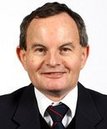
Air Commodore (Retd)
Royal Air Force Legal Services
Read more
Read more
Air Commodore Bill Boothby retired as Deputy Director of Royal Air Force Legal Services in July 2011. In 2009 he took a Doctorate at the Europa Universität Viadrina, Frankfurt (Oder) in Germany and has published books, inter alia, on Weapons Law, Targeting Law, the law relating to conflict and on new and emerging technologies. With Prof Wolff Heintschel von Heinegg, he published a Commentary on the US DoD Law of War Manual and a book entitled ‘Nuclear Weapons Law’, both with CUP. In January 2025 Air Commodore Boothby published AI Warfare and the Law through the US Naval War College and in May 2025 a project that he led culminated in the publication of a revised book, jointly edited with Prof Heintschel von Heinegg, on Nuclear Weapons Law. His tenth book, dealing with Brain Technologies, Warfare and the Law, was published in May 2026. His newly established substack is @williamboothby.
He has been a member of Groups of Experts that addressed Direct Participation in Hostilities and that produced the HPCR Manual on the Law of Air and Missile Warfare, the 2013 Tallinn Manual on the Law of Cyber Warfare and the Leuven Manual on Peace Operations Law. He is Visiting Professor at the University of Johannesburg.
Gary Corn
Gary Corn
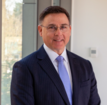
Program Director & Adjunct Professor
Technology, Law & Security
American University Washington College of Law
Read more
Read more
Professor Gary Corn is the director of the Technology, Law & Security Program and an adjunct professor of cyber and national security law and the law of armed conflict. A recognized expert on the intersection of cyber and national security law and policy, Professor Corn joined TLS after serving twenty-six years on active duty in the U.S. Army as a military attorney practicing national security law at the highest levels within the Department of Defense. His final five years he served as the Staff Judge Advocate (General Counsel) to U.S. Cyber Command. Professor Corn is a frequent, and highly-sought out speaker at international and national conferences and has published numerous articles, book chapters, and blog posts, including in the American Journal of International Law and the Lieber Institute’s Articles of War. He has contributed chapters to several Oxford University Press books and is a co-author of National Security Law and the Constitution (Wolters Kluwer)(2020).
During his military career, Professor Corn served in various positions at the brigade, division, and corps level, including multiple times as a military prosecutor, civil litigator, and operational law attorney. His assignments include serving as a Deputy Legal Counsel to the Chairman of the Joint Chiefs of Staff, the Operational Law Branch Chief in the Office of the Judge Advocate General of the Army, the Staff Judge Advocate to U.S. Army South, a Special Assistant United States Attorney in the District of Columbia, and on deployment as the Chief of International Law for Combined Forces Command in Afghanistan. Professor Corn received a JD from the George Washington University, a BA in International Relations from Bucknell University, an LLM from the U.S. Army Judge Advocate General’s Legal Center and School, and an MA in National Security Studies from the United States Army War College. He is also a graduate of the Escola de Comando e Estado Maior do Exército do Brasil (Command and General Staff College of the Brazilian Army).
Morten M. Fogt
Morten M. Fogt
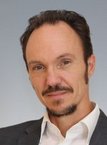
Dr. jur. LL.M.
Department of Law, Aarhus University
Read more
Read more
Morten M. Fogt holds a higher doctor (dissertation) degreed in law (dr. jur.) within comparative law and private international law. After his law study 1986-1991 he worked as Danish practising lawyer from 1991-1995, studied LL.M. in Kiel University 1996-1997 and passed the exam as German lawyer (Rechtsanwalt) 1998.
From 1998-2001 he was a researcher at Kiel University and in 2002-2003and taught at Vilnius, Riga and Tartu Universities until he became professor, first lecturer (associated prof.) 2004-2007, then in 2007 temporary professor in Civil and International Law at Aarhus University and since 2016 senior associated professor. He has been teaching as visiting professor in Kiel, Tartu, Louvain-La-Neuve and been temporary Member of St. John’s College, Oxford and affiliated to the Institute for European and Comparative Law, Oxford University. In 2010-2011 Morten M. Fogt by the Danish Ministry of Justice was appointed as the Chair of the negotiation on the Proposal for a Common European Sales Law (CESL). He was part of the Steering Committee on European Association of Private International Law (EAPIL) and has been Vice-President and member of the EAPIL Board and Scientific Council since its foundation from 2019 to 2026. In 2022 he hosted the EAPIL Founding Conference in Aarhus.
Eirini Giorgou
Eirini Giorgou

Legal Adviser
Legal Division/Arms and Conduct of Hostilities Unit, International Committee of the Red Cross, Geneva
Read more
Read more
Dr Eirini Giorgou is a legal adviser in the ICRC’s Arms & Conduct of Hostilities Unit. She works on the law regulating the conduct of hostilities, including urban warfare, the use of heavy explosive weapons in populated areas, nuclear weapons, and IHL and the environment. She has extensive experience in multilateral disarmament diplomacy and negotiations outside the ICRC. Eirini is a licensed lawyer and holds a PhD in international law from the University of Geneva.
Eric Talbot Jensen
Eric Talbot Jensen
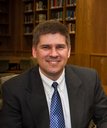
Robert W. Barker Professor of Law
Brigham Young University in Provo, Utah
Read more
Read more
Eric Talbot Jensen is the Robert W. Barker Professor of Law at Brigham Young University in Provo, Utah, and recently returned to BYU after serving for a year as the Special Counsel to the Department of Defense General Counsel.
Prior to joining the BYU law faculty in 2011, Professor Jensen spent 2 years teaching at Fordham Law School in New York City and 20 years in the United States Army as both a Cavalry Officer and as a Judge Advocate. During his time as a Judge Advocate, Professor Jensen served in various positions including as the Chief of the Army’s International Law Branch; Deputy Legal Advisor for Task Force Baghdad; Professor of International and Operational Law at The Judge Advocate General’s Legal Center and School; legal advisor to the US contingent of UN Forces deployed to Skopje, Macedonia as part of UNPREDEP; and legal advisor in Bosnia in support of Operation Joint Endeavor/Guard.
Professor Jensen is a graduate of Brigham Young University (B.A., International Relations), University of Notre Dame Law School (J.D.), The Judge Advocate General’s Legal Center and School (LL.M.) and Yale Law School (LL.M.). Professor Jensen is an expert in the law of armed conflict, public international law, national security law, and cyber warfare. He was one of the group of global experts who prepared the Tallinn Manual on the International Law Applicable to Cyber Warfare, and the Tallinn Manual on the International Law Applicable to Cyber Operations. He is co-author on The Law of Armed Conflict: An Operational Perspective, The Laws of War and the War on Terror, and National Security Law and Policy: a Student Treatise. He is the author of more than fifty law journal publications focusing on international law, the law of armed conflict, national security law, cyber law and international criminal law.
Major-General Flemming Mathiasen
Major-General Flemming Mathiasen
Oleksandr Pryzenko
Oleksandr Pryzenko
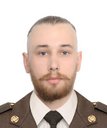
Captain of Justice
Senior Officer of the Legal Directorate of the Command of the Unmanned Systems Forces of the Armed Forces of Ukraine.
Read more
Read more
Captain of Justice, Senior Officer of the Legal Directorate of the Command of the Unmanned Systems Forces of the Armed Forces of Ukraine.
He holds a Master's degree in Law from Yaroslav Mudryi National Law University (Kharkiv, Ukraine).
He met the onset of Russia's full-scale invasion of Ukraine while serving as a soldier in a volunteer unit. He later served as a Legal Advisor to the International Legion for the Defence of Ukraine, where he gained practical experience in providing legal support to military operations and advising commanders on legal matters at the tactical level.
He subsequently joined the Command of the Unmanned Systems Forces of the Armed Forces of Ukraine, where he assumed the position of Operational-Level Legal Advisor.
His primary responsibilities include providing legal support for the planning and execution of operational- and strategic-level military operations, advising commanders on the application of international humanitarian law and Ukrainian national legislation during military planning and operations, and ensuring the legal support of the activities of the Command of the Unmanned Systems Forces.
Afonso Seixas-Nunes
Afonso Seixas-Nunes

Associate Professor
Boston College School of Law
Read more
Read more
Afonso was born in Porto, Portugal, in 1973. He joined the Portuguese Province of the Society of (Jesuits) in 1998, after he graduated in Law by the Portuguese Catholic University (Porto), and was ordained priest in 2010. Afonso, as a Jesuit, did his degree in Philosophy by the Portuguese Catholic University (Braga) for which he was awarded the Prize Pe Vitorio de Sousa Alves, and he has a degree in Theology by the Pontificia Universita Gregoriana, Italy). After his theological studies, Afonso went to London and has a Master’s in International Law and Human Rights by the London School of Economics and Political Science (LSE -UK). In early 2019, Afonso completed his doctoral thesis in International Humanitarian Law at the School of Law of the University of Essex (UK), entitled The Legitimacy and Accountability for the Deployment of Autonomous Weapon System under International Humanitarian Law, published by CUP (2022).
In September 2018, Afonso became a post-doc research fellow of the Oxford Institute for Ethics, Law and Armed Conflict (ELAC – University of Oxford) directed by Professor Dapo Akande at the Blavatnik School of Government. From 2021-2026, Afonso taught at Saint Louis University School of Law. In July 2026 Afonso joined Boston College School of Law as an Associate Professor. Afonso’s research focus on the implications of modern technologies on the battlefield, namely the use of outer space during situation of armed conflict.
Kenneth Watkin
Kenneth Watkin
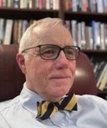
Brigadier-General (Retd)
Canadian Armed Forces
Read more
Read more
Brigadier-General (Ret’d) Ken Watkin, OMM, CD, KC served for 33 years in the Canadian Armed Forces. This included 28 years as a military lawyer with four of those years (2006-2010) as the Judge Advocate General. Ken advised extensively on international and domestic operational law issues following 9/11; represented the Canadian United Nations Assistance Mission for Rwanda (UNAMIR) Commander, Lieutenant-General (Ret’d) Dallaire, following the 1994 genocide, appearing as Government counsel in 2004 before the International Criminal Tribunal for Rwanda, and was the advisor to the 1993 joint civilian/military Board of Inquiry investigating the Canadian Airborne Battlegroup in Somalia.
Post military retirement Ken served as a Foreign Observer to the Israeli Independent Commission investigating the 31 May 2010 Gaza blockade incident, was the Charles H. Stockton Professor of International Law at the United States Naval War College (2011-2012), and was a United Nations consultant on battlefield evidence collection in Nigeria and to the Canadian government regarding human intelligence collection.
Ken Watkin has written extensively about the application of international law to contemporary conflict with his book Fighting at the Legal Boundaries: Controlling the Use of Force in Contemporary Conflict (Oxford University Press, 2016) being awarded the 2017 Francis Lieber Prize by the American Society of International Law as “an exceptional published work in the field of armed conflict.” Ken also co-authored a second book, Law in War: A Concise Overview (Routledge, 2nd ed., 2023) and is presently co-editing a book scheduled for publication in the Fall of 2026, Law in the Shadows of War: Espionage and Sabotage in Modern Conflict. He has published over seventy articles, commentaries and book reviews on international humanitarian law, human rights and national security law (see LinkedIn profile) with his work being cited by both the Canadian and Israeli Supreme Courts. His work now concentrates on the international law governing espionage, sabotage and treachery during hybrid warfare and contemporary armed conflict.
Martha Bradley
Martha Bradley

Associate Professor
Department of Public Law at the University of Johannesburg
Read more
Read more
Professor Martha M. Bradley holds an LLB (Bachelors of Law), LLM (Masters of Law in Air, Space and Telecommunications Law), LLD (Doctors of Law) from University of Pretoria and an LLM (Masters of Shipping Law) from the University of Cape Town. She is an Associate Professor in the Department of Public Law at the University of Johannesburg, South Africa, and an associated researcher with the NRF South African Research Chair in International Law.
Martha teaches in the Advanced IHL Course at the International Institute of Humanitarian Law in San Remo. She serves on the Editorial Advisory Board of the Max Planck Yearbook of United Nations Law and has been a Land Steiermark Fellow at the University of Graz (2023) and a Stellenbosch Institute for Advanced Study Iso Lomso Fellow (from 2026). She is also an alumni of the South African Government’s Future Professors Program, Phase 2 Cohort 1. She previously served as an external expert on the Common African Position on international law and cyberspace.
Martha is responsible for the classification of armed conflicts under the IHL in Focus and WarWatch projects at the Geneva Academy.
Geoffrey Corn
Geoffrey Corn
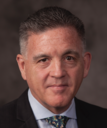
George R. Killam Jr. Chair of Criminal Law and Director of the Center for Military Law and Policy
Texas Tech University School of Law
Read more
Read more
Retired U.S. Army Lieutenant Colonel. Service as both an intelligence officer and a military attorney and culminated his career as the Army’s senior law of war advisor. B.A. from Hartwick College, a JD with highest honors from George Washington University, and a Masters of Law as the distinguished graduate from the U.S. Army Judge Advocate General’s School. Co-author of The Law of Armed Conflict: An Operational Perspective; The Laws of War and the War on Terror; National Security Law and Policy: Principles and Policy; U.S. Military Operations: Law, Policy, and Practice; National Security Law and the Constitution, and Law in War: A Concise Overview (with K. Watkin and J. Williamson).
Dr. Emanuela-Chiara Gillard
Dr. Emanuela-Chiara Gillard

Senior Visiting Fellow
Oxford Institute for Ethics, Law and Armed Conflict, University of Oxford
Read more
Read more
Dr Emanuela-Chiara Gillard is a Consulting Fellow in Chatham House’s International Law Programme and a Senior Visiting Fellow at the Oxford Institute for Ethics, Law and Armed Conflict.
Emanuela has over two decades’ experience in the field of international law and humanitarian action. In the past decade a particular focus of her work has been the interplay between sanctions, counterterrorism measures and humanitarian operations. She has addressed these issues from operational, policy and academic perspectives.
Emanuela’s work also addresses particular aspects of the protection of civilians in armed conflict, including proportionality in the conduct of hostilities, the rules regulating relief operations, and the law and practice of humanitarian arrangements, such as humanitarian corridors, suspension of hostilities and protected zones. With Prof Dapo Akande is the co-author of the Oxford Guidance on the Law Regulating Humanitarian Relief Operations in Armed Conflict.
Emanuela’s most recent publication is a 2026 report for Chatham House on the protection of medical care in armed conflict.
From 2007 to 2012 Emanuela was Chief of the Protection of Civilians Section in the Policy Branch of the UN Office for Coordination of Humanitarian Affairs. For seven years prior to joining OCHA, she was a legal adviser at the International Committee of the Red Cross. Before joining the ICRC in 2000, Emanuela was a legal adviser at the United Nations Compensation Commission. From 1995 to 1997 she was a research fellow at the Lauterpacht Centre for International Law at the University of Cambridge.
Emanuela holds B.A, LL.M. and Ph.D. degrees from the University of Cambridge. She is a Solicitor of the Supreme Court of England and Wales.
Wolff Heintschel von Heinegg
Wolff Heintschel von Heinegg
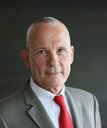
Professor
European Law and Foreign Constitutional Law, Europa-Universität Viadrina in Frankfurt
Read more
Read more
Until April 1, 2025, Professor Dr. Wolff Heintschel von Heinegg was the Chair of Public Law, in particular Public International law, European Law and Foreign Constitutional Law at the Europa-Universität Viadrina in Frankfurt (Oder), Germany. In the academic years 2003/2004 and 2012/2013 he was the Charles H. Stockton Professor of International Law at the U.S. Naval War College. From 2007 until 2016 he was a member of the Council of the International Institute of Humanitarian Law in San Remo, Italy. From May 2012 until May 2018, he was the Vice-President and since May 2018 he has been the President of the International Society for Military Law and the Law of War. Professor Heintschel von Heinegg was among a group of international lawyers and naval experts who produced the San Remo Manual on International Law Applicable to Armed Conflicts at Sea. He was a member of several groups of experts working on the current state and progressive development of international humanitarian law, including the Manual on Air and Missile Warfare (2010) and the Tallinn Manuals on the International Law Applicable to Cyber Warfare (2013) and to Cyber Operations (2016), the Oslo Manual on Select Topics of the Law of Armed Conflict (2020) and the Newport Manual on the Law of Naval Warfare (2nd ed. 2025). He is a widely published author of articles and books on public international law, in particular international humanitarian law, European and German constitutional law.
Dr. Caroline Pellaton
Dr. Caroline Pellaton

Operations Director
Geneva Water Hub
Read more
Read more
Ms Caroline Pellaton is a water governance and humanitarian expert with over 15 years of international experience spanning hydrodiplomacy, water infrastructure, and conflict settings. She currently serves as Operations Director at the Geneva Water Hub, where she leads strategic development and oversees programmes focused on the protection of water in armed conflict, engaging with international partners including the ICRC, UNICEF, and diplomatic missions in Geneva and New York.
Previously, Caroline spent a decade with the International Committee of the Red Cross (ICRC), holding senior Water and Habitat coordination roles across the Middle East, Africa, and Asia, including Yemen, Jordan, South Sudan, the Central African Republic, Niger, and Sri Lanka. She has led multidisciplinary teams, designed and implemented large-scale urban and rural water projects, and managed complex operations in conflict-affected environments. Originally trained as a geologist, Caroline holds a PhD in Earth Sciences from the University of Geneva and combines strong analytical skills with extensive field leadership experience.
Aurel Sari
Aurel Sari
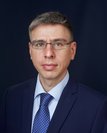
Professor of Public International Law
University of Exeter, Law School
Read more
Read more
Dr Aurel Sari is a Professor of Public International Law at the University of Exeter and an expert in international law. His scholarship focuses primarily on international conflict and security law and the law relating to military operations, including the law of armed conflict, the military use of AI and the changing character of warfare.
Dr Sari takes an active part in international research initiatives. He is one of the core drafters of the Manual on the International Law Applicable to Artificial Intelligence in Warfare prepared under the auspices of the United States Military Academy at West Point and has contributed several chapters to the ongoing revision of the United Kingdom’s Law of Armed Conflict Manual. He is a member of the International Law Association’s Committee on Artificial Intelligence and Technology Law and serves as the Chairperson of the UK National Group of the International Society for Military Law and the Law of War.
Dr Sari maintains close working relationships with legal practitioners in the armed forces and has participated in a number of multinational exercises as an augmentee.
Kristin Hausler
Kristin Hausler

Dorset Senior Fellow and Director of the Centre for International Law
British Institute of International and Comparative Law, in London
Read more
Read more
Kristin Hausler is the Dorset Senior Fellow and Director of the Centre for International Law at the British Institute of International and Comparative Law, in London. She leads research projects anchored in cultural heritage matters, including legislative reviews of heritage laws in transitional contexts in the Middle East and Africa and studies aimed at strengthening the protection of heritage, such as ‘Culture Under Fire’ which engaged armed groups in the safeguarding of heritage. Kristin has provided training on heritage protection for police officers for ICCROM / INTERPOL and for military and peacekeepers in Africa for UNESCO, as well as on the prosecution of heritage crimes for Ukrainian prosecutors.
She is a member of the Swiss National Commission for UNESCO, a Peace Fellow with PILPG for which she worked on the integration of heritage matters in peace treaties, and the chair of the ILA Committee on the Safeguarding of cultural heritage in armed conflict. Previously, she worked at the Museum of Anthropology in Vancouver on a proactive repatriation project entitled ‘The Journey Home’, which focused on the repatriation of Ancestral remains to Indigenous communities. Before becoming a lawyer, she studied art history at Christie’s in New York.
Her latest book, entitled ‘Beyond Restitution: Exploring the Stories of Cultural Objects after their Return’, was published by Hart in August 2025.
René Valk
René Valk
Pei-Lun Tsai
Pei-Lun Tsai

Assistant Professor
Department of Diplomacy, National Chengchi University
Read more
Read more
Pei-Lun Tsai currently serves as Assistant Professor at Department of Diplomacy and Deputy Director, Research Center for International Legal Studies, National Chengchi University in Taiwan and offers courses on international law, international organizations, international migration law, international humanitarian law, and refugee law. She obtained her LL.M. in International Legal Studies from New York University and Ph.D. in Law from University of Nottingham. She has since been engaged in research in various other fields of international law, including dispute settlement, use of force, international humanitarian law, human rights law, international criminal law, law of the sea, and environmental law.
Additionally, she is Associate Managing Editor of the Chinese (Taiwan) Yearbook of International Law and Affairs and Executive Committee Member of the Chinese (Taiwan) Society of International Law, the Chinese (Taiwan) branch of the International Law Association. Prior to joining National Chengchi University, she was Assistant Professor at National Taiwan Ocean University and Adjunct Assistant Professor at National Central University in Taiwan.
Colonel Inna Zavorotko
Colonel Inna Zavorotko
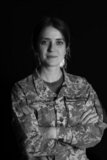
Colonel
Armed Forces of Ukraine
and
Head of the International Law Division
Legal Department, Ministry of Defence of Ukraine
Read more
Read more
Inna Zavorotko is a Colonel in the Armed Forces of Ukraine. She currently serves in the Legal Department of the Ministry of Defene as a Head of the International law branch.
Before joining the Legal Department of the Ministry of Defense, Col Zavorotko served as a Legal Advisor in a number of positions from brigade to the General Staff of the Armed Forces of Ukraine advising commanders on international, administrative, and criminal law issues.
Her combat experience and deployments include serving in the Joint Forces Operation HQ (Ukraine) and the United Nations Organization Stabilization Mission in Democratic Republic of the Congo.
Inna Zavorotko has a Ph.D. in the International Law from the National University of Kyiv-Mohyla Academy.
Speaker list will be updated continuously
Contact
If you have any questions, please contact:
